The museum is in a very modern, brightly lit building (opened in 2003) and focuses exclusively on local exhibits from all time periods, which are divided into themes. And lucky for me, their most extensive collection was in the religion theme! There were ancient Germanic burial monuments, bunches of Roman altars and gravestones, several Early Christian gravestones carved with the Chi Rho, wonderful Romanesque carvings from Cologne churches, paintings... I was in heaven.
 Pictured at right is the title of the religion section. Sadly this was pretty much the only bilingual sign in the museum. I spent a couple days after our visit attempting to translate the German museum labels in order to caption our photos. It was a bit of a tedious process, but of course I was interested to learn about all the stuff anyway.
 You can see some of the best treasures with full captions on my article on the museum, or check out the photo gallery. Even that only scratches the surface, as I still have a good hundred more photos to work through!
Some highlights (click on photos for much more detailed captions):

Three Magi from a Romanesque choir screen near Cologne (c.1150).

An impressive floor mosaic from a 3rd-century Roman villa. In the center is the sun god (who was especially popular in this period) with his chariot, surrounded by the signs of the zodiac.


A rare (in Germany) and beautifully carved depiction of the signs of the zodiac, which decorated a lot of medieval churches in France. This is Aquarius and Cancer. Note that Cancer doesn't look much like a crab - medieval Scorpios rarely look realistic, either. Both tend to look more like lobsters.

Chi Rho (first two letters of "Christ" in Greek) on a beautifully carved gravestone from the 6th century AD.

Detail of a Christian gravestone of the 5th century AD. The deceased's loved ones clearly didn't have the money for a professional engraver like the one above.


Creatures that look like a cross between Snoopy and an alien, decorating a burial monument from about 500 BC.

Eyeballs! This is St. Ottilie, who was born blind but healed through baptism, and is the patron saint of eye diseases.


A mysterious stone from the 7th century and a lovely Madonna and Child.

A fairly innocuous-looking painting of a rich family, but if you walk up to it and look close...

...there are some very interesting details! As you might guess, these are the unlucky ones at the Last Judgment.

A happier scene to end on: the mosaic gravestone of a friendly-looking Abbot Gilbert, first abbot of Maria Laach.
After the museum we stopped briefly in Bonn Münster to try out the new lens in its very dark interior:
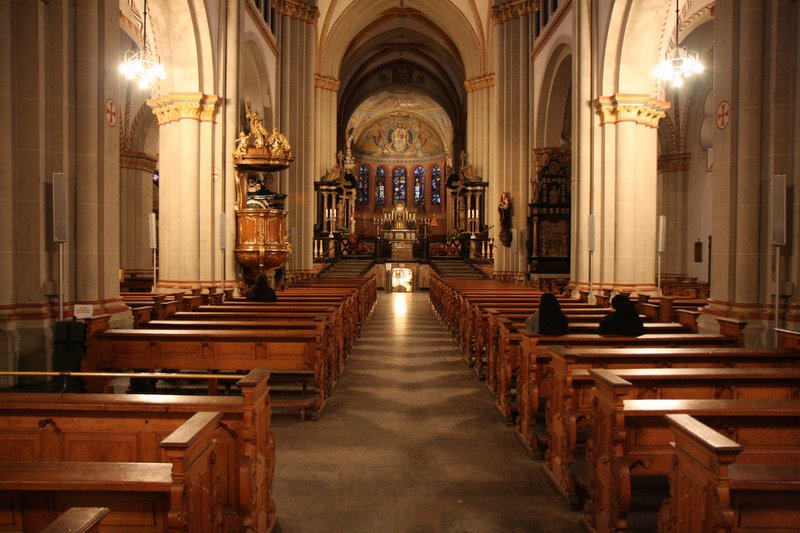
It did well.
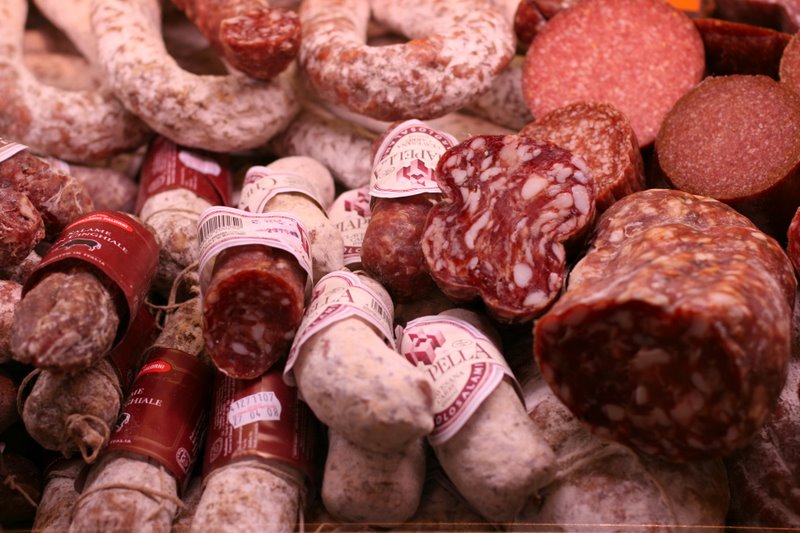
Then we picked up some groceries in our new favorite store in the Galeria basement, and I took a picture of sausages. There are a lot of sausages in that store. And every other store in Germany!

For dinner that night we had fresh seafood cooked in our heart-shaped pie pan. The scallops were especially divine! At the store I had been delighted to learn that the German word for scallop is Jakobsmuschel, reflecting the scallop's role as symbol of St. James and pilgrims to his shrine in Santiago de Compostela.


No comments:
Post a Comment