Monday, October 29, 2007

Chalgrove, Toot Baldon and Oxford

Sunday was pretty rainy but we visited a church that had its main attraction on the inside - one of the most complete sets of medieval murals in England (painted in about 1330). Chalgrove Church is only five minutes' drive from our house and I didn't even realize it until that morning, which is pretty incredible.

We arrived just as a lady was leaving and she turned on the lights for us and said she'd be back in an hour or so to lock up. The murals were very cool and we had a great time.

chancel with murals (c.1330)
The chancel with its murals

life of the virgin mary (c.1330)
Life of the Virgin Mary

men
Detail from the Funeral Procession of the Virgin

resurrection of the dead
Resurrection of the Dead

deposition from the cross
Deposition from the Cross

More info and a full photo gallery can be seen here:
www.sacred-destinations.com/england/chalgrove-church.htm

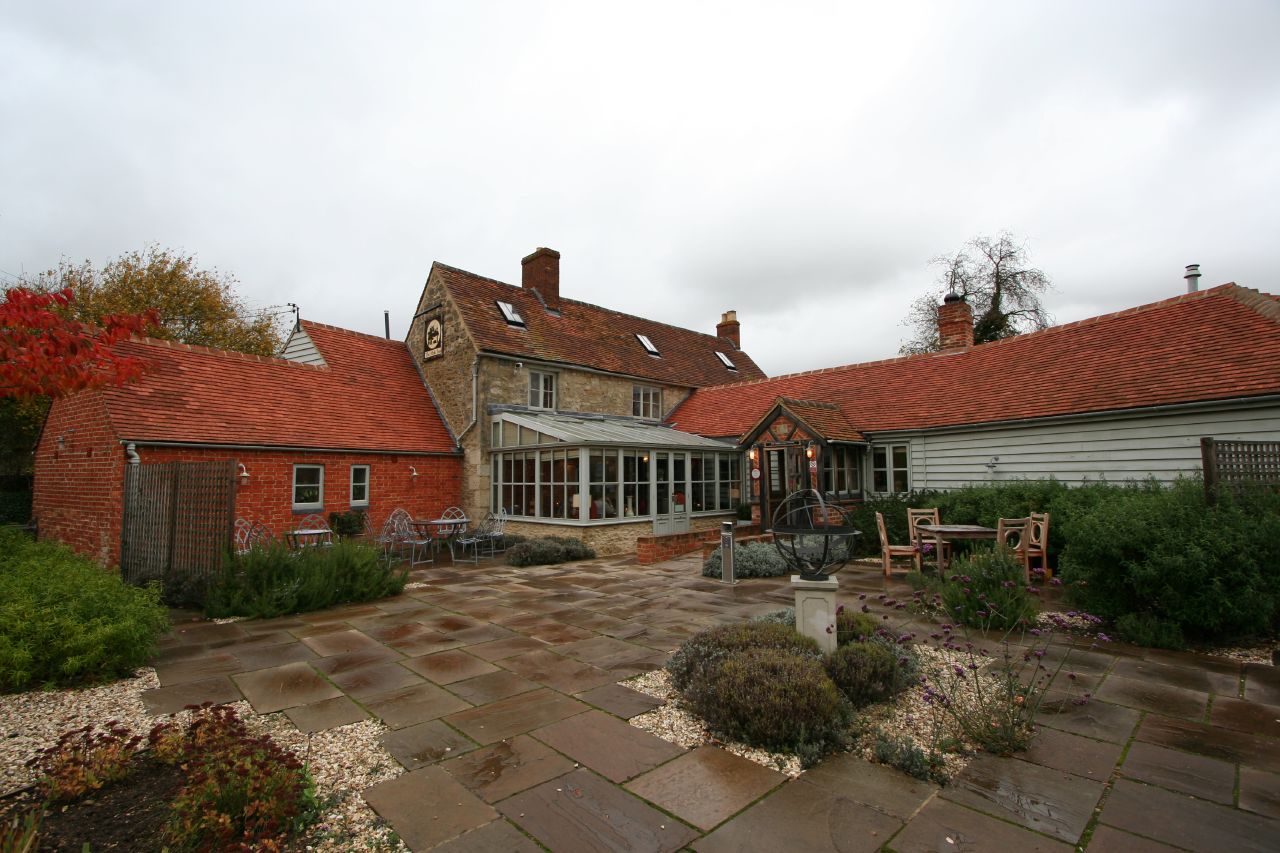
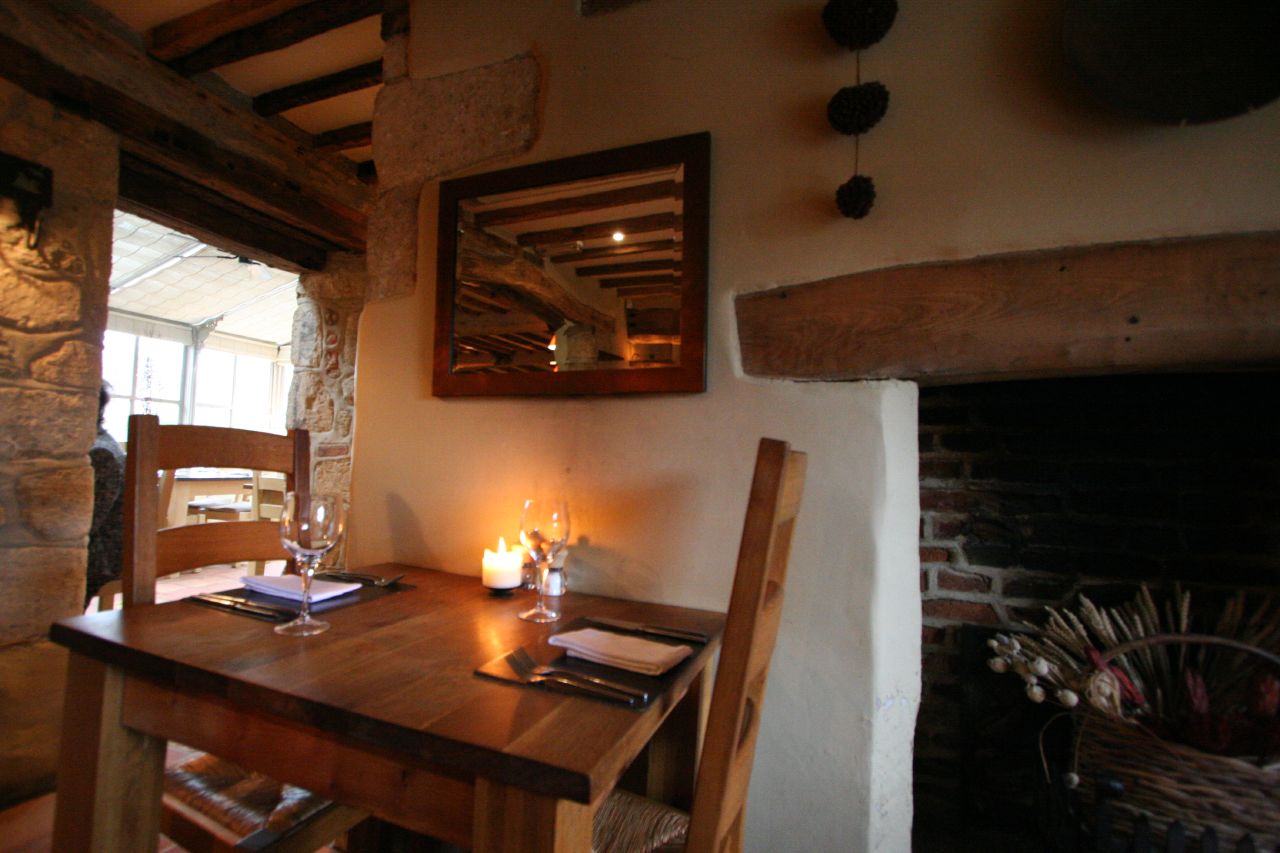
While we were out we decided to try a Sunday roast at a pub called The Mole Inn, which was recommended by a friend. A sign on the door said it was Michelin recommended and it was beautiful inside, all old stone and wood beams. But unfortunately the food turned out to be nowhere near as good as our local Lamb Inn (in Little Milton). Our bread and olive appetizer was fantastic, though.

the mole the mole
the mole

As we pulled out of the parking lot at the Mole we saw a sign for a parish church, so headed down the lane to check it out. The village has one of the best names yet - Toot Baldon. The church itself was not terribly exciting, but it was located at the end of a long, tree-lined road and had a very cozy feel about it.

autumn lane
scenic parking spot
nave

Monday we went into Oxford to run some errands and visit the Ashmolean Museum. As a bonus, it was brilliantly sunny all day.

We picked up lunch from Pret and enjoyed it perched on a bench on Cornmarket, which was much less crowded than usual. Then we headed to the Ashmolean Museum, where I was mainly hoping to check out the inscription we'd seen at Odda's Chapel in Deerhurst the other week.

ashmolean museum

Alas, it is closed on Mondays! So we went here instead:

ben's cookies
Ben's Cookies in the Covered Market. Yum.

butcher
Black pudding in the Covered Market. Not so yum.

Sunday, October 21, 2007

A woodland church in the Cotswolds

To finish up my report of last Monday's outing, from Deerhurst we headed home on the A44 highway, which took us through the Cotswolds. We didn't stop in the famous Stow-on-the-Wold (though it was looking especially lovely as we drove through), but in a village just two miles beyond it called Oddington. Great name.

I learned about Oddington from a handy book I had along called England's Thousand Best Churches. The author gave Oddington's parish church one of the highest ratings, and when we arrived we could see why. It was really quite magical - even David got quite enthusiastic about it and wants to return.

oddington, gloucestershire

A big part of its charm is its location, which is not in the center of the village but a half-mile outside it in the middle of the woods. This is because the village moved due to plague. The "new" village was quite pretty too, and we even stopped so I could hop out and take a picture of this cottage:

oddington, gloucestershire

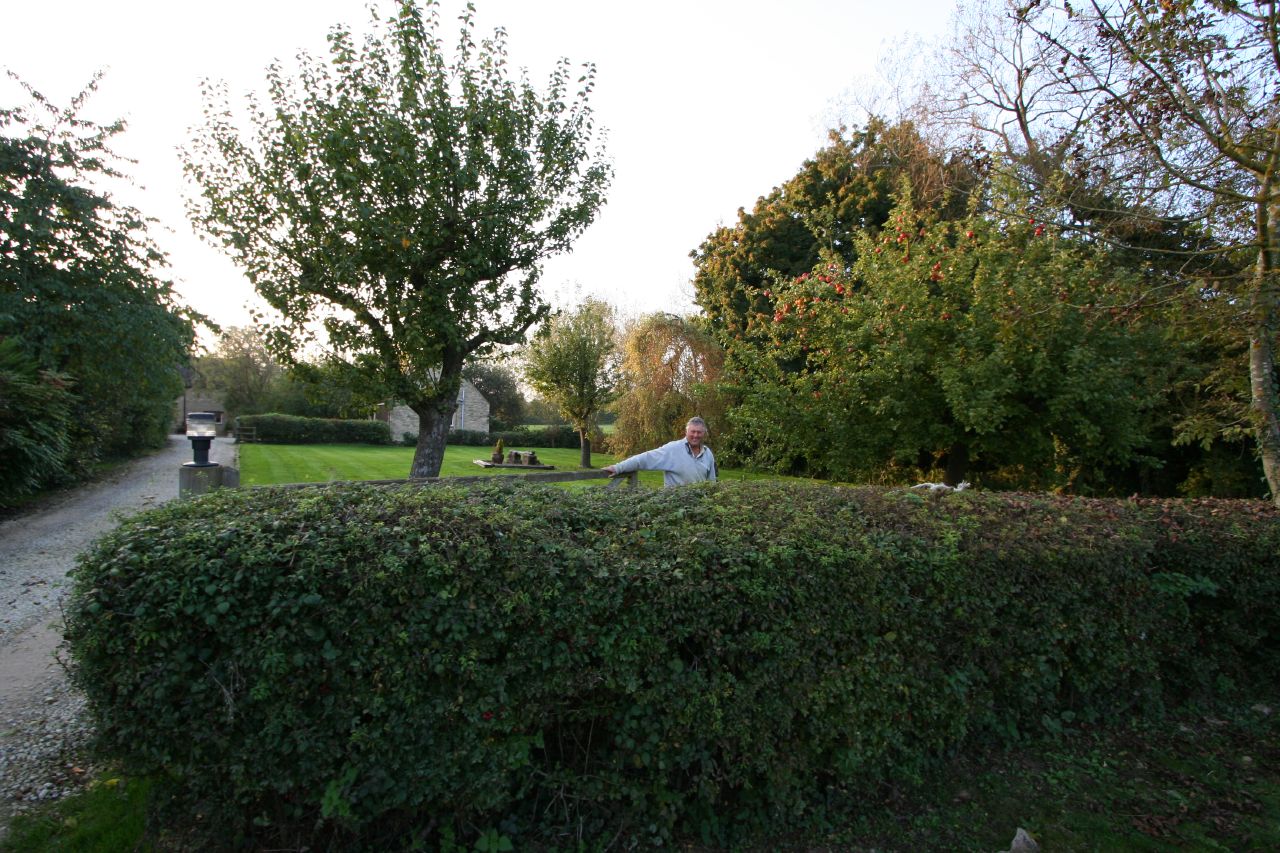
Where we pulled over, a friendly man was out closing his gate for the evening. When I got out of the car with my camera he joked, "Are you going to take my picture?" So naturally I said yes, and did. He then informed me that the cottage across the street was the oldest one in the village.

oddington man

We arrived at the church at dusk and the light was just gorgeous:

oddington, gloucestershire

The lighting situation was not as ideal for the inside of the church, which we were pleased and surprised to find unlocked that late in the evening. There seemed to be no artificial lighting and it was quite dark (our photos make it look much lighter than it was).

oddington, gloucestershire

But we still managed to get a few photos before the sun went down completely, which is good because it was a very pleasant church with medieval murals covering an entire inside wall. To battle with the low light and faded murals, I even went back to grab the tripod out of the car, which normally we are much too lazy to bother with!

The main wall painting dates from about 1340 and depicts the Last Judgment. This was a rather common theme in medieval church art.

doom mural (c.1340)

Like all murals in England, this was whitewashed over at the Reformation and remained hidden until 20th-century restorations. This one is in pretty bad shape, but it's still notable because its the largest of its type in the country. It is 32 feet long and 15 feet high. At the center top is Christ in Glory, with his feet resting on the moon. Below him, two angels blow their trumpets to resurrect the dead.

At the bottom center, people rise out of their graves to be judged and meet their fate. (As always, they are naked but not anatomically correct.) On the left, the righteous approach the gates of heaven, which is shown as a castle. One guy has bypassed the line and climbs over the wall, assisted by angels. On the right, the wicked are prodded towards the jaws of hell and demons in striped clothes torture them in various ways. One man hangs from a gallows and some other unfortunates are boiled in a cauldron.

climbing into heaven (c.1340) tortures of hell (c.1340)

There is another wall painting to the right of this one, which has a much lighter subject. It was painted two centuries later, in 1520, and represents a morality play called "Magnificence." It is believed to be a satire on Cardinal Wolsey, Henry VIII's right hand man and the founder of Christ Church College in Oxford (only he wanted to call it "Cardinal College"). Wolsey was also Lord of the Manor of Oddington.

"magnificence" mural (c.1520)
The "Magnificence" painting with allegorical characters

The churchyard was so pretty too, surrounded by a forest and sprinkled with autumn leaves. Out back was a funny tomb of a lady in a dress with her shoes sticking out, which dates from the 1620s.

oddington, gloucestershire

More information and many more photos are available here on Sacred Destinations.

Saturday, October 20, 2007

Saxon churches of Deerhurst, Gloucestershire

After visiting Gloucester Cathedral last Monday (on which see previous post), we headed just nine miles north to the village of Deerhurst, which boasts not one but two Saxon churches. The Anglo-Saxon period ranges from about 600 AD until the Normans took over in 1066. Saxon architecture is fairly rare and I think the only example we'd ever seen is the Saxon tower of St Michael at the North Gate in Oxford.

Our first stop in Deerhurst was St. Mary's Church, which is still in use as the village parish church.

h-1263
It wasn't too hard to find a parking spot!

st mary's church, deerhurst

St. Mary's was founded in the late 600s as a Saxon minster (a monastic church used for missions to local pagans). It seems to have been used for the burial of at least one Saxon king, so it was expanded over the centuries and became a pretty impressive church for its time. The tower dates from an expansion in the 900s.

st mary's church, deerhurst

The church was also expanded after the Saxon period - the sides with the windows were added around 1200 in the Early English style. But the center of the church is still entirely Saxon, which gives the whole thing a very unique look. Saxon architecture tends to be much taller and narrower than later architecture, and you can really see it in the above photos. The tower seems to be squished between the aisles.

10th-century saxon angel
Hidden around back is this rare 10th-century carving of an angel.

nave looking west

The above photo is taken from the front of the church looking back towards the entrance and the tower. You can see there are lots of weird triangular cutouts, which made me think of a Jack o'Lantern. The double triangle is thought to symbolize the Eyes of God watching over the congregation, and the blocked-up arch once led onto a balcony where relics were displayed.

cheerful supplicants
One of the windows has 15th-century stained glass with very medieval-looking characters in them. This group, which I think is a family, looks quite cheerful.

deerhurst, gloucestershire
These guys are little more reserved.

You can see all our good photos and get lots more information on this church here on the Sacred Destinations website: St. Mary's Church, Deerhurst.

From St. Mary's it was just a short amble down a gravel road to Deerhurst's other Saxon church, which is called Odda's Chapel. This simple chapel was founded in 1056 by a man named Odda, who was a relative of King Edward the Confessor. He dedicated it to his brother Aelfric.

heading to odda's chapel
to odda's chapel
odda's chapel (1056)

The Saxon chapel was later attached to a half-timbered cottage, and the two buildings make a rather picturesque pair.

odda's chapel (1056)

Not too much to see inside, but like St. Mary's it was interesting because it's a rare survival and different from most English churches.

odda's chapel (1056) odda's chapel (1056)

On display in the cottage part of the building is a replica of the dedicatory inscription that was found on the site, which is how we know about Odda and his brother.

odda's chapel (1056)

And the original inscription is in the Ashmolean Museum in Oxford! We will have to stop by to check it out sometime. More Odda's Chapel photos and info are available here.

By the time I'd finished having a look around and taking pictures, David had quite understandably wandered down this inviting path...

to the river

...which led to a lovely field alongside the River Severn, which flows down into Gloucester. This is where the Saxon missionaries sailed up from Gloucester when they established their "minster" here 1,300 years ago.

severn

It was fantastic. We sat down in the grass for awhile and just relaxed, listened to the water, and thought about how much we like England.

h-1404

Then we drove home through the Cotswalds, where we stopped at one more village church just before it got dark. That turned out to be possibly the best one of the day - but it is bedtime so I'll save it for the next post.

Wednesday, October 17, 2007

Gloucester Cathedral

On Monday the nice weather continued so we drove up to Gloucester, which I've long been wanting to see. The drive took about an hour and a half and we found a great parking spot near the cathedral. After a quick and utilitarian lunch of McDonald's cheeseburgers, we set our cameras loose on one of the nicer cathedrals of England.

gloucester cathedral

Gloucester Cathedral began life as an abbey church built over Roman walls. St Peter's Abbey, as it used to be known, was founded by the Saxon king Osric in 681 AD. The church was originally made of wood, but this was replaced with a stone church in 1058.

It was here in 1085 that William the Conqueror ordered the famous Domesday Book, an account of all the lands and properties of the land he just conquered (so he could start taxing them). A few years later the church burned down, and in 1087 construction began on the large Norman church that still stands today.

gloucester cathedral

"Norman" refers to a style of architecture used in England from about 1080 to 1200. It is basically the English version of Romanesque, an early medieval style of architecture found throughout Europe and most beautifully in France. It was brought to England by William the Conqueror and the many immigrants who followed him from Normandy after he did his conquering in 1066.

The Normans were wealthy and they liked to build churches and castles, so a lot of English architecture dates from this period. However, after Gothic architecture was invented the simple old Norman stuff seemed outdated, so most churches were given major Gothic makeovers in the 13th to 15th centuries. Gloucester Cathedral is no exception, so it's now a mish-mash of Norman and Gothic.

The Norman-ness of Gloucester Cathedral is best seen in the nave, with its giant pillars (6 feet in diameter!) and round arches carved with zigzags. The pointed arches, slimmer pillars, big windows and flying buttresses that are so prevalent in Gothic architecture hadn't been invented yet. At this point, it was simply about having big strong pillars to carry the weight of the heavy walls and roof.

gloucester cathedral

The ceiling of the nave is not Norman - it is gracefully Gothic, added in 1242. It has some golden roof bosses that you can barely see from the ground, but have some interesting details for those with a zoom lens (yay, that's us!):

gloucester cathedral
I can't quite figure out if this is a man hunting a lion or a man who is half lion and preparing to chop off his own tail for some reason.

More Norman goodness can be seen in the crypt, which is the oldest part of the cathedral (1087). In order to see it you have to find a cathedral guide with a red sash and ask them to unlock it and take you down. We had an excellent guide and this was one of the highlights of our visit.

crypt
keys to valhalla mustache man

There are two interesting carvings in the crypt: a rope-like design that our guide said represents the keys to Valhalla and a man's face with big eyes and a super-long mustache. His identity isn't known, but our guide's favorite theory is one that was suggested by some Danish visitors. They had seen a similar face in Denmark and France, and believe it is the Viking god Odin, carved into early churches to hedge bets in case the Christians turned out to be wrong.

Back upstairs, there are a couple royal monuments in the ambulatory around the east end. The first we came to is an effigy of Robert of Normandy, the oldest son of William the Conqueror.

robert of normandy (d.1134)

This unfortunate knight was imprisoned by his younger brother (King Henry I) and died in Cardiff Castle (nearby in Wales) in 1134. He was buried in Gloucester Cathedral and this effigy of him was carved about a century later. The crossed legs indicate he had been on a crusade, I believe, but I'm not sure what the odd arm position means.

robert of normandy (d.1134)

The other one is the tomb of King Edward II, which was the closest thing this church ever had to a holy relic. (It was always good to have relics, because relics brought pilgrims and pilgrims brought money.) Edward was murdered in 1327 and this fancy alabaster tomb was ordered by his son, Edward III, shortly after.

king edward ii (d.1327)

The shrine of the slain king brought many pilgrims over the next 70 years, which funded a major rebuild of the choir and east end of the church (1331 to 1350). The two best features of the choir (pictured below) date from about 1350: the misericords and the Great East Window.

choir

Misericords are little "mercy seats" in the choir that gave the monks something to lean on while still appearing to stand throughout long services. Because they weren't usually visible, medieval artists had virtually free reign to depict scenes of everyday life. The carvings are often symbolic, humorous or even vulgar, and rarely religious. Gloucester Cathedral has a set of 46 medieval misericords, which are in excellent condition. But part of the choir was roped off so that only eight of them were accessible, unfortunately.

gallop
Galloping with musical accompaniment?

pigs, acorns, and a squirrel
An autumn scene - squirrel, acorns and pigs

dice game
Playing a dice game

Overlooking the choir is the Great East Window, which also dates from 1350. It has miraculously preserved most of its original medieval glass, and it's pretty spectacular.

great east window (c.1350)
The panels at the very top are angels, and below them are the Virgin Mary and Christ, both wearing crowns. Stretching to the left and right of them are the Twelve Apostles. The next row down has various other saints, and at the bottom are kings, bishops and abbots.

great east window (c.1350)
The Virgin Mary and Christ in the center of the window

great east window (c.1350)
Three apostles.

And finally, the last bragging point of Gloucester Cathedral are its cloisters. They are fully intact and fully enclosed, and have the earliest example of fan vaulting in England (which I remember being very impressed with at Bath Abbey even before I knew what fan vaulting was). More importantly to some, the cloisters were used in the filming of at least two Harry Potter movies.

cloisters (late 14c)
cloister garden

For more info and more photos (248 to be exact!), see:
Gloucester Cathedral or
Gloucester Cathedral Photo Gallery

After the big cathedral in the big city, we headed nine miles north to two tiny churches in a tiny village and we relaxed on the grass by a river afterwards. It was wonderful. More on that in the next post.